Digital psychedelics
What are digital psychedelics?
A digital psychedelic is a deep, dreamlike state reached through light, sound and vibration instead of a substance. How it works, what it feels like, how it differs from psychedelic drugs, and what to expect from your first session.
October 15, 2026
7 min read
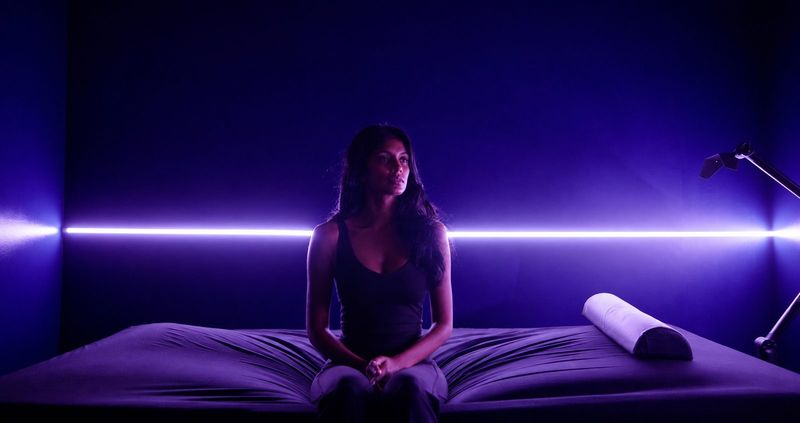
A digital psychedelic is a deep, dreamlike altered state reached through the senses instead of a substance. Light, sound and vibration are synchronized until the everyday noise in your head falls away. Nothing is taken. At Reality Center in Santa Monica, it happens in sixty minutes on the WaveTable, with a practitioner in the room.
Interest in psychedelics has grown fast, and so has curiosity about ways to reach that kind of state without drugs. This guide covers what a digital psychedelic is, how it works, what it feels like, how it differs from psychedelic drugs, and what to expect from your first session.
What is a digital psychedelic?
A digital psychedelic (sometimes called a technodelic) uses technology, rather than a chemical, to shift your state of consciousness. Instead of acting on the brain through a substance, it works through what you see, hear and feel. When those inputs move together in a carefully designed pattern, many people slip into a state that feels like the edge of sleep, a deep meditation or a vivid dream, while staying safely awake and comfortable.
The idea is not new. In 1990, Reality Center co-founder Don Estes, a medical technologist and neuroscientist, published a theory he called Sensory Resonance: for every outer sense there is an inner one, and when all the senses are synchronized, the body reaches a state that is both relaxing and inspiring. More than thirty years of instruments later, that theory is what the WaveTable is built to deliver.
How does a digital psychedelic work?
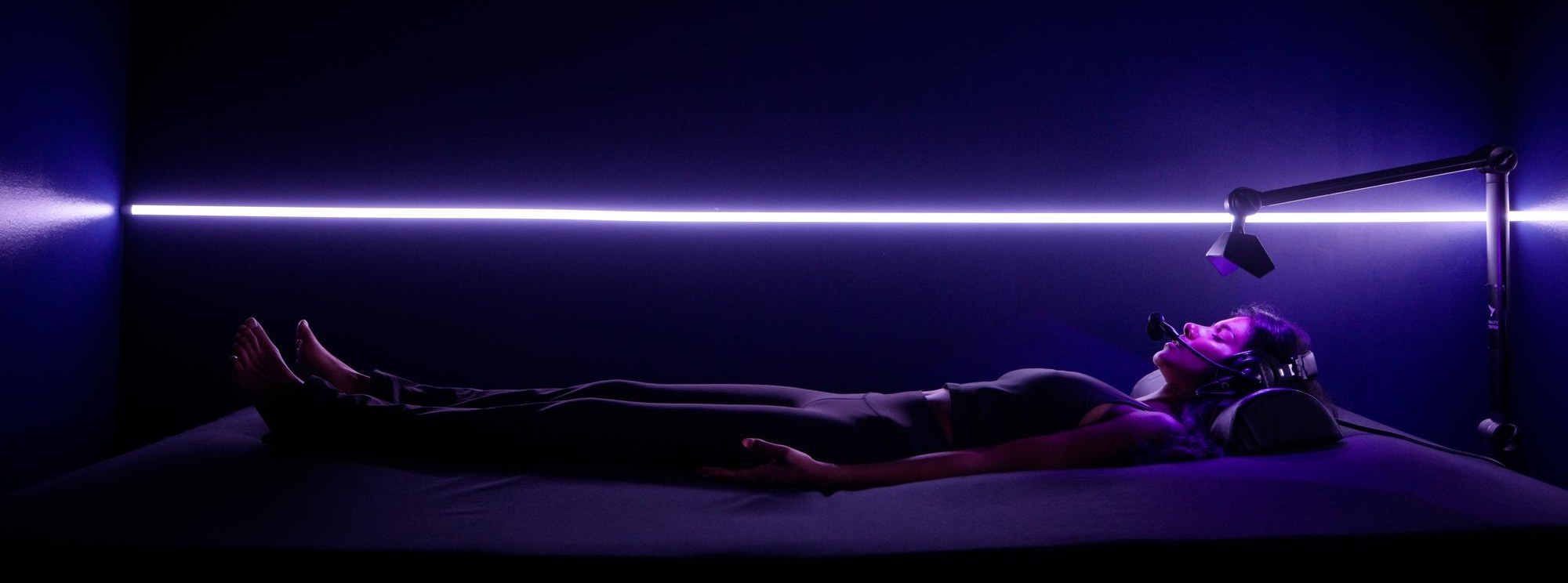
Three senses are engaged at once, and the experience comes from how they line up.
- Light. Programmed light plays over your closed eyes. Most people see colour and moving patterns behind their eyelids.
- Sound. A composed score fills your headphones, built to move with the light.
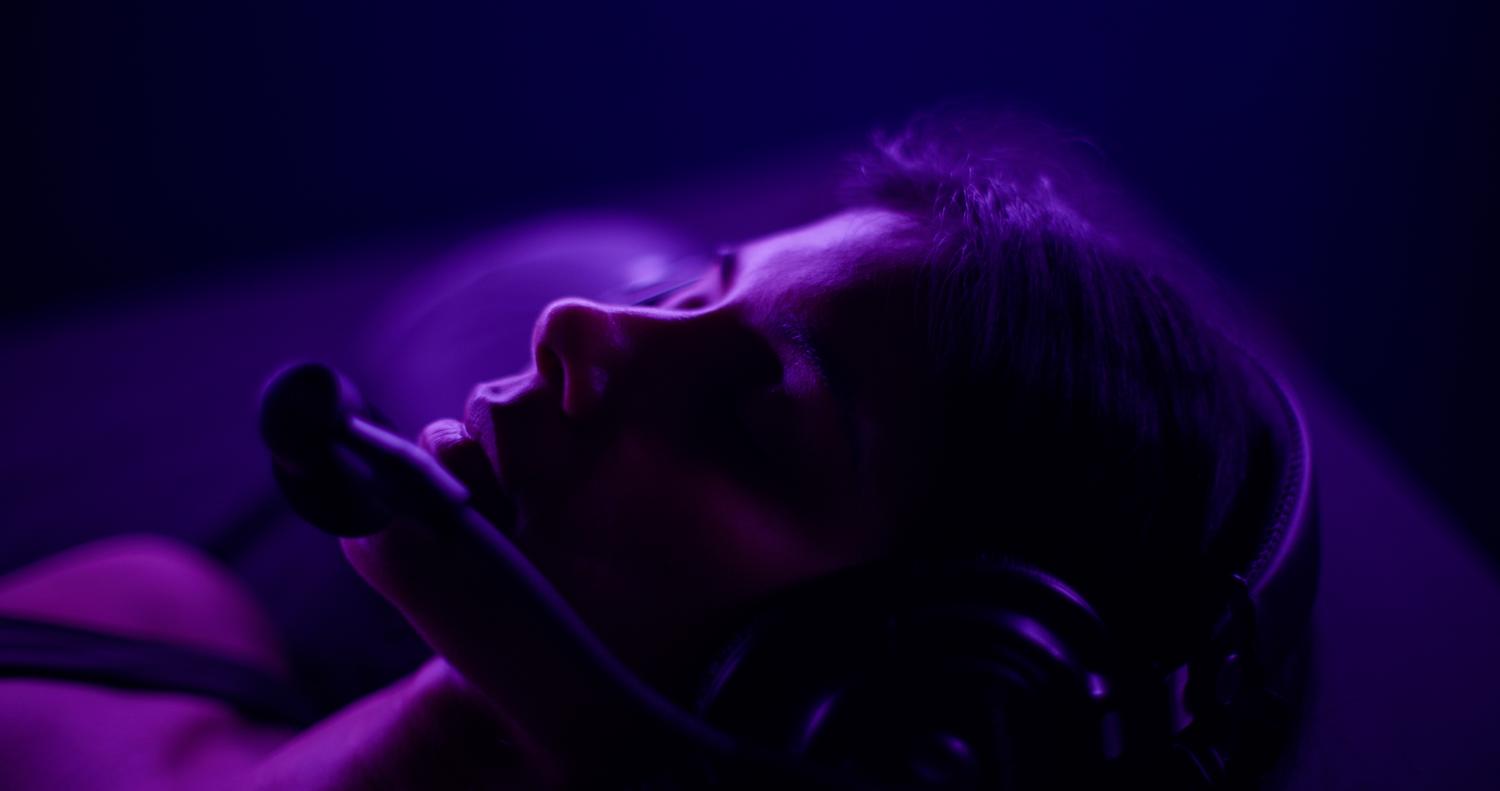
- Vibration. The WaveTable carries the sound through your whole body, so you feel the music as much as you hear it.
On their own, each of these is pleasant. Together, in sync, they give your mind one coherent thing to follow. The constant background chatter tends to quiet, and attention turns inward. That is the shift people describe as a digital psychedelic.
What does it feel like?
Every session is different, and so is every person. Guests commonly describe:
- Vivid colour and shifting patterns, even with eyes closed
- A sense of floating, or of the body becoming light
- Time stretching or seeming to disappear
- Deep physical release, with tension letting go head to toe
- A quiet mind, sometimes for the first time in a long while
- Moments of clarity or insight that stay with them afterwards
Some people simply rest more deeply than they have in years. None of these is required, and there is no right way to have a session. You lie down; the experience does the rest.
Digital psychedelics vs. psychedelic drugs
The word "psychedelic" describes the experience, not a substance. The differences matter:
- Nothing is taken. The whole experience comes from light, sound and vibration.
- It ends when the session ends. When the light and sound stop, you return to everyday awareness. Most people sit for a few minutes before getting up.
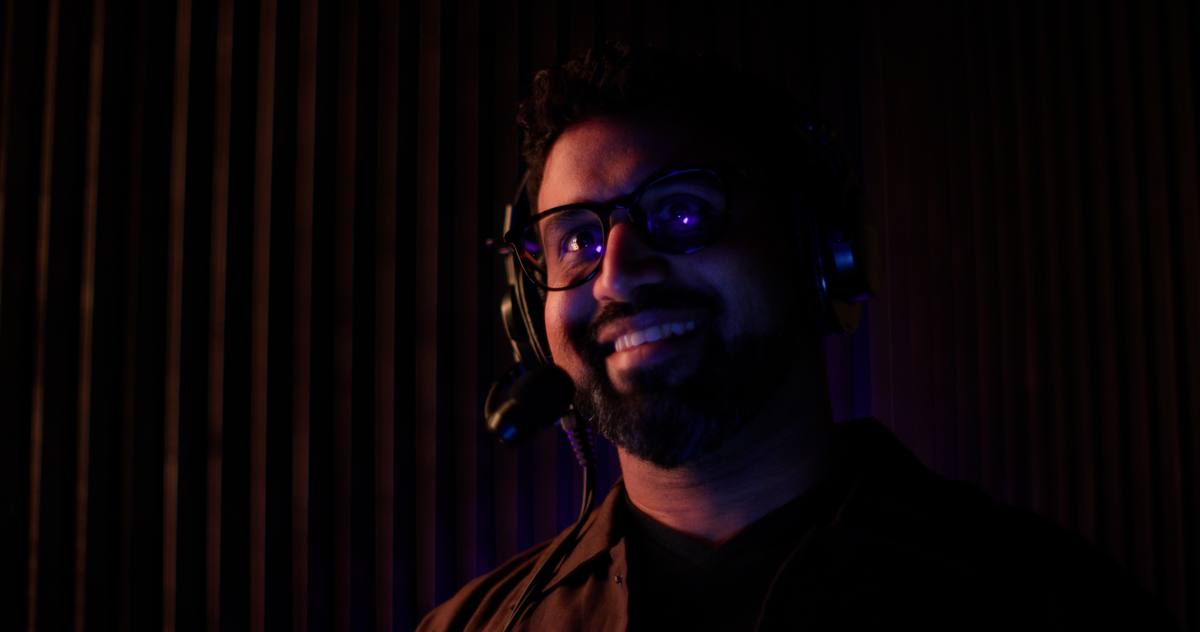
- It is guided. A practitioner is in the room throughout, and every session includes thirty minutes of integration: time to prepare before and to talk it through after.
- No experience is needed. You do not need to meditate, have tried psychedelics, or know anything about frequencies.
Is it safe?
For most people, a session is simply a deep rest. There are some important exceptions. If you have photosensitive epilepsy, glaucoma or another eye condition, or an implanted electronic medical device, speak to your physician before booking and tell us first. Sessions support wellness and self-regulation; they are not medical care or a treatment, and they do not replace care from a professional.
What the research shows
A UCLA study of Reality Center sessions measured 152 guests before and after a single session. Average wellbeing scores (on an adapted WHO-5 index) rose 23%, and scores for hope, belonging and coping (LA County's BUPPS-SV survey) rose 14%. All 11 survey questions improved, and every change was statistically significant. In our own surveys across 150 sessions, guests reported 52% less pain, 30% better sleep and 57% less stress.
These results are self-reported and experiences vary, but they match what guests tell us after their first session: calmer, clearer and more rested. You can read more about the study on our About page.

Who tries digital psychedelics?
People come to Reality Center for many reasons: stress that never fully switches off, sleep that has slipped, burnout, recovery after a hard stretch, or plain curiosity about altered states without drugs. Our community programs have also welcomed more than 1,500 veterans and their families. Teams and groups book sessions together, too.
What to expect at your first session
Your first visit is a Reality Reset: a full sixty-minute session and consultation.
- Arrive and settle. A brief check-in with your practitioner about what you are carrying and what you would like from the hour.
- Lie back on the WaveTable. Headphones on, eyes closed. The light, sound and vibration begin, and you simply follow them.
- Return and integrate. Time to land, talk it through and carry what you noticed into the rest of your day.
Bring water, clean socks (shoes come off) and an open mind, and avoid a heavy meal in the hour or so before. We are at 1428 2nd Street, Suite 400, Santa Monica, a block from the beach, with free 90-minute parking across the street. If you would like to keep going after your first session, our programs of four and eight sessions track how you change from one visit to the next.
Frequently asked questions
Is a digital psychedelic a drug?
No. Nothing is taken. The experience comes entirely from synchronized light, sound and vibration.
Do I need experience with meditation or psychedelics?
No. You lie down and the session guides you. Many guests have never meditated.
Will I see visuals?
Most people see colour and moving patterns behind closed eyes, but experiences vary. Some simply rest deeply, and that is just as valuable.
How long is a session?
Sixty minutes on the WaveTable, plus thirty minutes of integration around it. Plan on about an hour and a half.
How much does it cost?
A Reality Reset is $249. Your first visit is $99 with code RESET99, entered when you pay, and it comes with our promise: feel better or your money back.
Where can I try a digital psychedelic in Los Angeles?
At Reality Center, 1428 2nd Street, Suite 400, Santa Monica. We are open Tuesday to Saturday, 10am to 6pm.